
THE WORLD NEEDS GROUPS LIKE RIVER PARTNERS!
This group saves wild places and human communities!

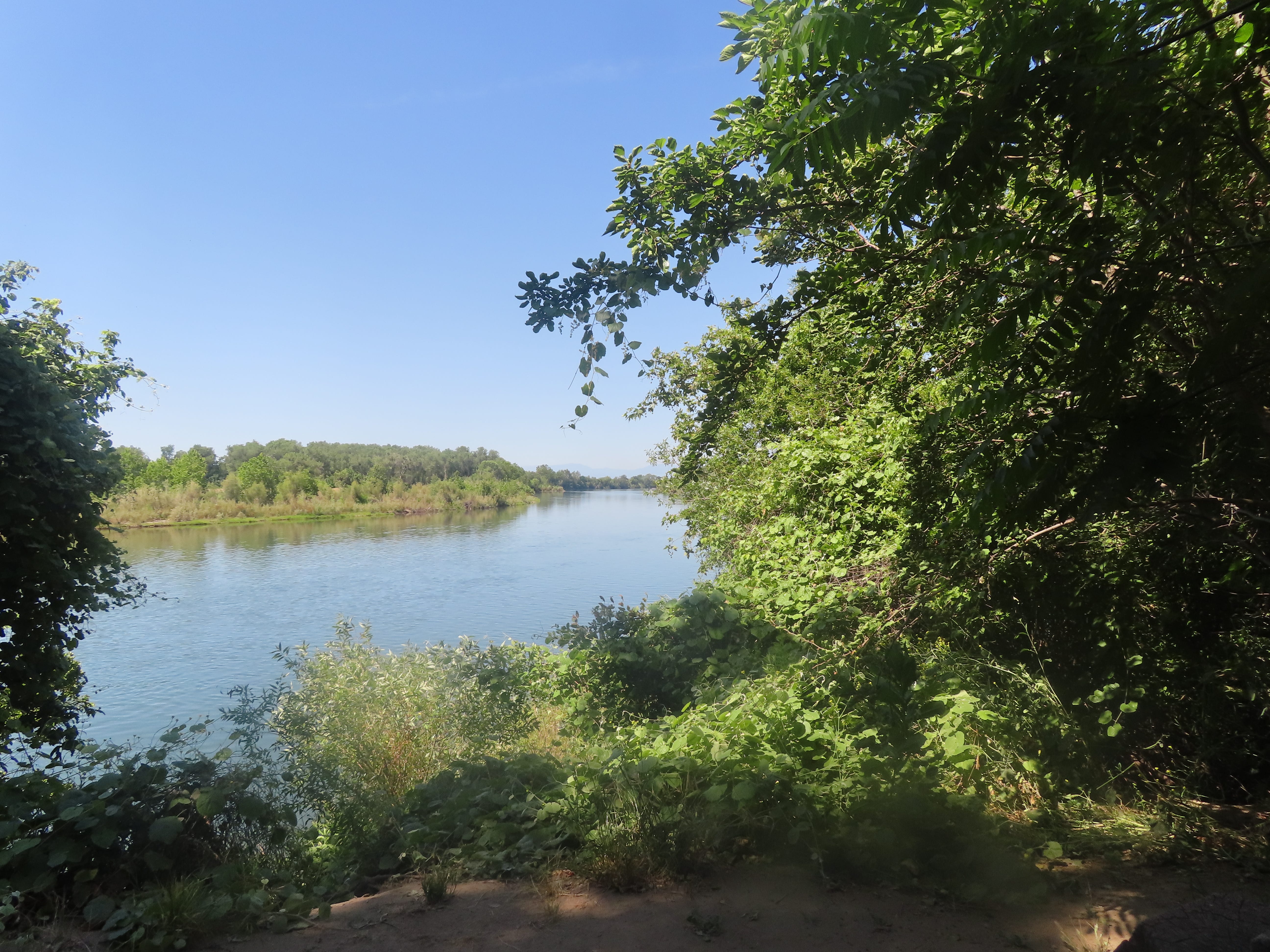
Sacramento River, taken at the Pine Creek Restoration Site
Many individuals and organizations understand how to develop projects that benefit both humans and natural communities. I recently found a statement by the late Pete Seeger where he described how his focus was always for the meek to inherit the earth, but he realized that without care for nature, they would inherit a devastated planet. He became a long-term environmental activist as a result. Now let me tell you about River Partners.
This Chico, California based non-profit began in 1995 as Sacramento River Partners twhen several farmers realized that they and conservationists shared a need for healthy soils, water, and biodiversity. They and environmental scientists originally focused on damaged riparian habitat along the Sacramento River. Today, River Partners has worked on more than 300 projects in 21 watersheds. These include projects in the Sacramento Valley, the Bay-Delta region, the San Joaquin Valley, and other areas.
River Partners’ website states that only 5% of California’s rivers remain healthy, natural habitat. The other 95% have been impacted by industry, agriculture, housing, and other types of development. The organization works hard to build a network of interconnected floodplains that will benefit both wildlife and humans.
These projects will provide California’s native plants and animals, some of which are threatened or endangered, with healthy habitats. In addition, forests that are close to rivers can block and slow down floodwater that threatens human communities, and allow the water to sink into the soil and strengthen the water table. Forests can also filter pollution from water, and young forests in particular capture carbon dioxide from the atmosphere and slow climate change. People will also have a greater range of open spaces for recreational and educational activities.
RESTORING A RIPARIAN FOREST
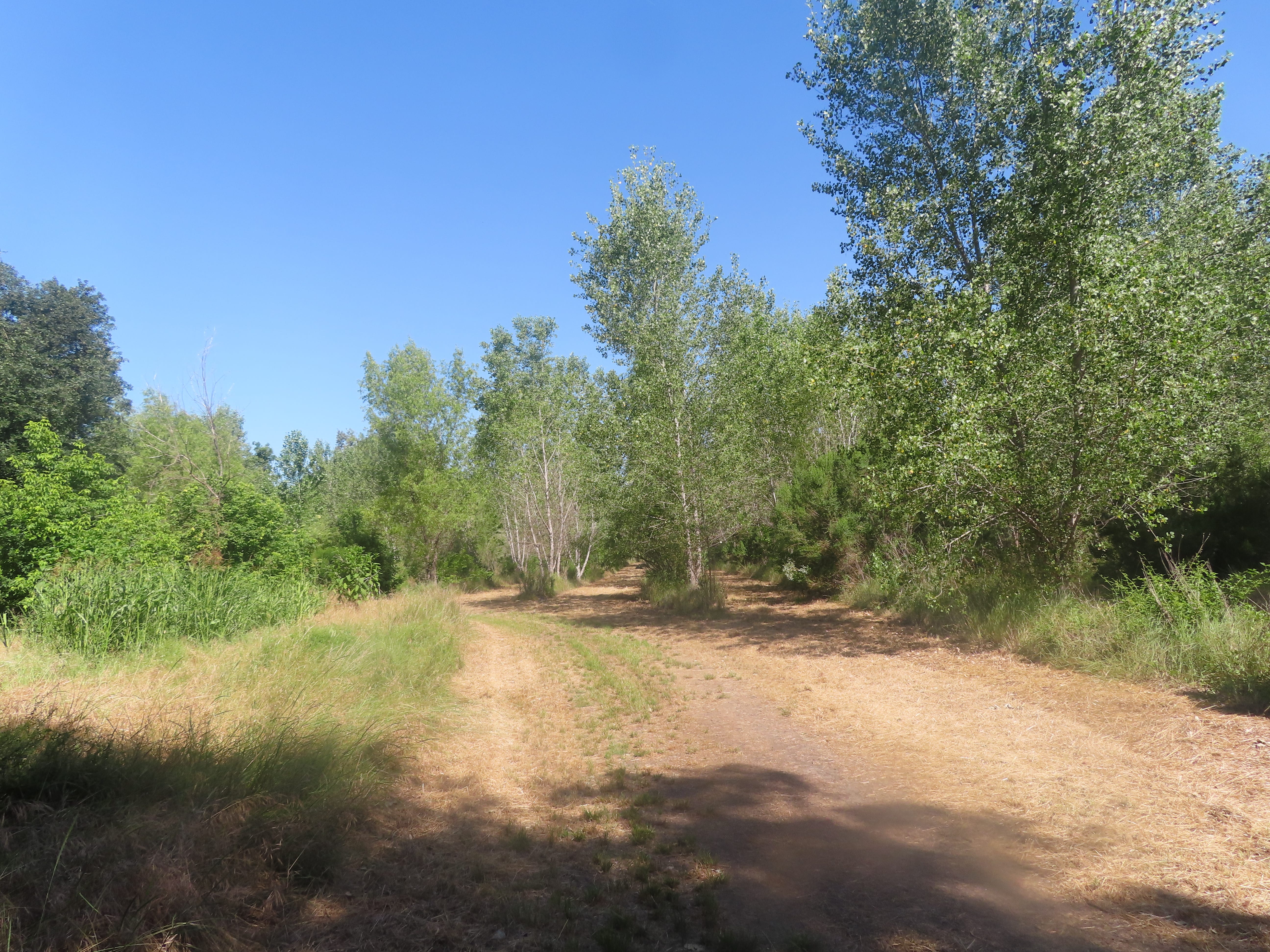
A group of curious explorers met River Partners’ biologist Holly Ferrara in a parking lot next to the Pine Creek Unit on a sunny May, 2026 morning. An orchard composed of almond trees in neat rows lay on the far side of River Road. Holly led the hikers on trails between the road and the Sacramento River. Young big leaf box elders, willows, and valley oaks reached heights above everyone’s head. Northern Californian shrubs covered the ground, and masses of birds’ songs fell from the trees’ branches.
“This area used to be an orchard too,” Holly said, “like the one across the street. Can you guess how old it is?
Guesses included 10 and 15 years. “It was planted in 2021-2022,” Holly said with a smile. “It’s amazing how quickly these projects take off, but the soil here is phenomenal. This isn’t typical for such a young project!
“River Partners isn’t in the business of long-term land management,” she continued. “When we purchase land, it’s always with the intention of returning it to local Native American tribes, if they’re interested, or to the Fish and Wildlife department, California’s State Parks system, or local communities. River Partners acquires land from willing sellers, often in situations where agricultural succession is uncertain or where recurring flooding from the river has reduced the long-term economic viability of farming. These properties are then restored to native habitat and reconnected to natural floodplain processes.”
River Partners receives funds from a range of places, including the federal government, the state of California, and philanthropists. The group also finds grants from sources that support ecological restoration and repairs to damaged land. If one source dries up temporarily, the group has many others it can reach out to.
A Nuttall’s woodpecker drummed on a tree as we walked along a sandy trail that was once the Sacramento River’s bed. “I think of rivers as living, breathing beings,” Holly said. The Sacramento, like all rivers, changes its position over time, and it meanders like a side-winder rattle snake over a flat floodplain. It flows quickly and erodes soil and gravel from one bank, then slows down to deposit material on the opposite bank.
“We do research to determine which native plants grew in a site before it was developed for agriculture, and plant those to encourage wildlife to return to the area,” Holly said. After the remnants of the orchard were removed from this site, River Partners used a light application of herbicides to discourage the growth of invasive plants that take more of their share of water and crowd out native plants.
“Of course, you can never eliminate invasives,” Holly commented. “You can manage their growth, but many leave large caches of seeds underground that can last for years. Fires can stimulate these seeds to grow after people think the invasive is gone. We plant natives that can outcompete them with time, and monitor them to make sure their communities are healthy.”
Native plants come in gallon drums that River Partners buys from local nurseries. “We irrigate them for three years until their roots can reach the water table,” Holly commented. “The goal is for them to become self-sustaining so they can survive on their own. People wonder why we plant trees in rows like in an orchard. We place them parallel to the river so they can slow flood waters; if they were perpendicular to the river, it would act more like a runway/funnel into neighboring properties during high flow events. We plant native grasses and others among the rows so they can grow outward onto the land. This site is gradually becoming a wild one that is starting to attract wildlife.”
We passed one valley oak that towered above the younger trees. “We didn’t plant it, it is likely more than 100 years old,” Holly said. “Its roots are established and home to many wildlife species, so we decided to leave it here. This is also an area of cultural significance where there are signs of native peoples’ settlements. We consult with tribes to decide how to manage them. Sometimes we do higher density plantings to discourage people from wandering around in these sites.”
A scrub jay squawked at us, a robin sang, and a turkey vulture watched us from a log as Holly continued, “The yellow-billed cuckoo is one of the most endangered species along the Sacramento River. We plant cottonwood trees to give them habitat. We’ve also found skunks, deer, and many birds. Otter slides tell us that these mammals are here too!”
An osprey watched us as we returned to our cars. It seemed to want to make sure we wouldn’t disturb its huge nest, which probably held its young. Its presence told us that this space was healthy, and growing healthier all the time!
SAVING A SMALL TOWN
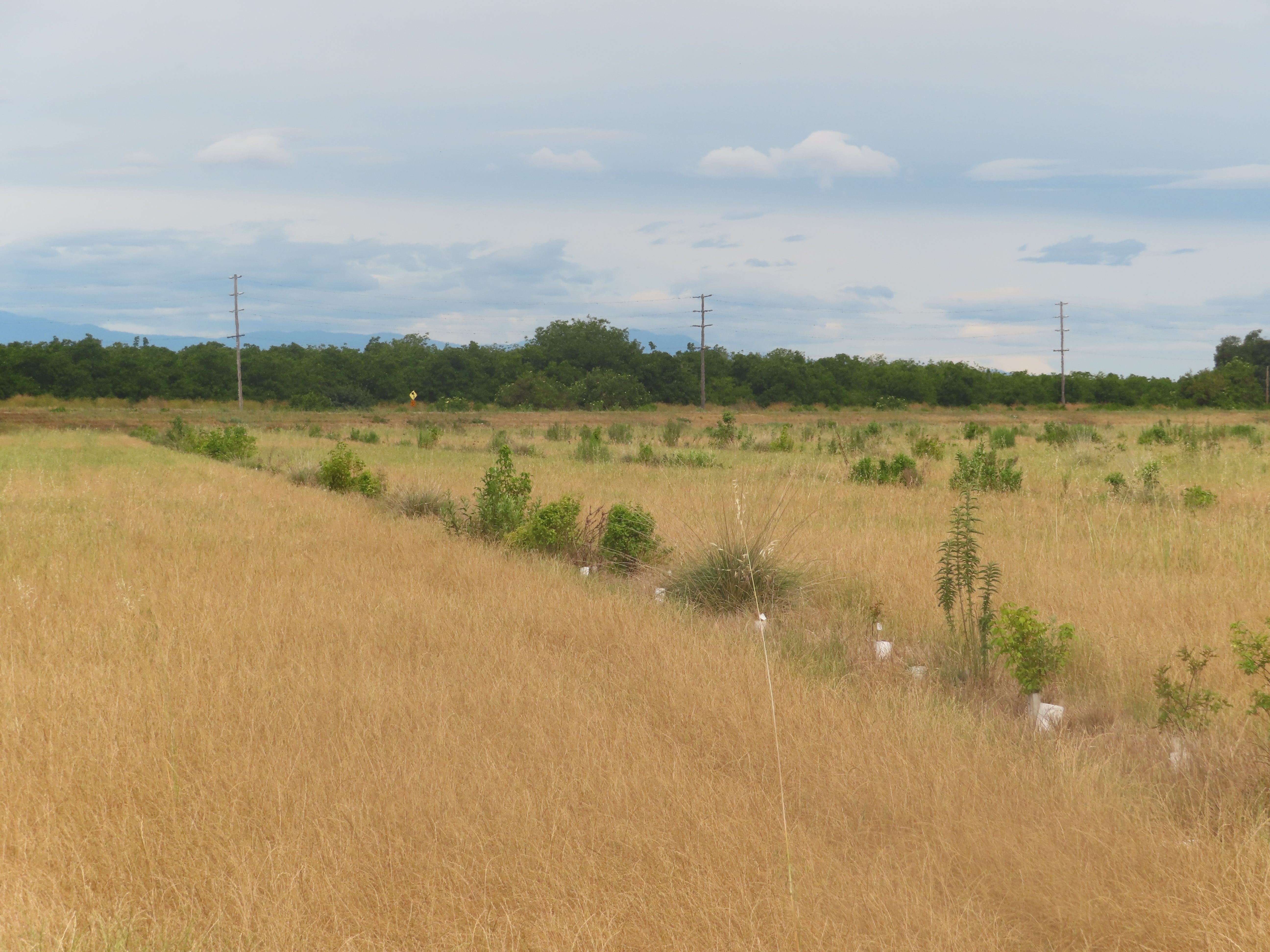
Restoration site near Hamilton City, California
Holly and the group met a week later at a restoration site north of Hamilton City, an agricultural town of 2300 citizens that lies about ten miles west of Chico. The plants on this sandy spot were younger and shorter than the ones at the Pine Creek project, but they were thriving. This Northern Sacramento Valley community experienced floods that forced people to evacuate between six and eight times during a 30 year period.
An aging levee that was built next to the Sacramento River’s banks was largely responsible for this situation. Construction that would have allowed space for the water to flow into the floodplain so it could sink down to the water table would have been wise, but humans are known for our mistakes. “It was basically Swiss cheese because of wear, and damage from gophers,” Holly said. “It couldn’t hold the river back.”
Hamilton City’s citizens organized and spent more than three decades pushing for a solution to this threatening situation. They heard for years that removal of the old levee and construction of a new one farther from the river would be too expensive, and that they had to live with the floods. Fortunately, the Army Corps of Engineers determined that the project would be cost effective if it were combined with restoration of the riverbank’s ecosystem and improving habitat. This was a unique perspective, and the first time the Corps took such an integrated approach to prevent flooding.
Restoration, including the removal of the old levee and the construction of another farther from the river happened in two phases. The Army Corps of Engineers developed a restoration plan which River Partners implemented, with help from the Nature Conservancy and other groups.
Phase One involved a 900-1000 acre site. Work ended there in 2020,and River Partners turned management of the site over to a community based restoration district in Hamilton City. The soil is less productive than at Pine Creek, and the area doesn’t resemble a forest so much, but the native plants thrive and sustain themselves. . Holly and her guests visited the 400 acre Phase 2 site farther north from the town. River Partners and community members began to plant native trees and shrubs during the summer of 2024.
“There were delays, so we had to plant during the hot summer,” Holly said. River Partners hired and paid community workers to help with the work. “They weren’t biologists, and some spoke little English.” River Partners developed a system where each species is associated with a unique number so the workers could determine where each belonged. They communicated with each other and with River Partners’ staff to determine where each plant would find a good home.
“We hired local people and buy supplies from neighboring businesses to keep the money in the community,” Holly commented. She pointed out the cardboard signs that identified each plant and the bamboo posts that supported them. “We got both of these from nearby businesses. They are biodegradable and will fall apart naturally.”
The native plants grow in rows that are determined by the soil composition and dampness. Their communities include valley oak forest, elderberry savannah (grassland), shaded riverine by the Sacramento Riverine, and others. Again, these plants are younger and shorter than the ones at the Pine Creek site, but they thrive. Older valley oaks surround them and the southern Cascade Mountain Range give the scene a beautiful border.
“We will irrigate these plants for three years until their roots reach the water table and they can sustain themselves,” Holly commented. “ We’ll remove the irrigation tubes then, and The Hamilton City reclamation district will manage things. We have a problem with rodents who chew holes in the tubes and eat the roots of plants– we have to manage them!”
A red tailed hawk cried its territorial call as it circled the field. “It’s probably looking for tasty rodents down here,” Holly said with a grin. “We’ve found coyotes, bobcats, rabbits, nesting osprey, and lots of songbirds here. This spot is a success!”
People are part of the natural world, and policies that help humans and natural communities are a big part of the world’s future. River Partners is a thriving group that will promote this idea for years. Projects like this one really give me hope!
REFERENCE
River partners
https://riverpartners.org/
Note: these field trips were sponsored by Chico, California’s Osher Lifelong Learning Institute (OLLI.) Thanks to Chico Olli for agreeing to let me post this article on Substack.
All photographs by Paul Belz